
Atelier V.V. — About
Made by hand.
From scratch.
In Belgium.
Three years ago we started rebuilding a craft Belgium had lost. Nobody handed us the knowledge. We found it in archives, in museums, in months of patient experiment, and in the generous help of institutions and people who believed it was worth saving.
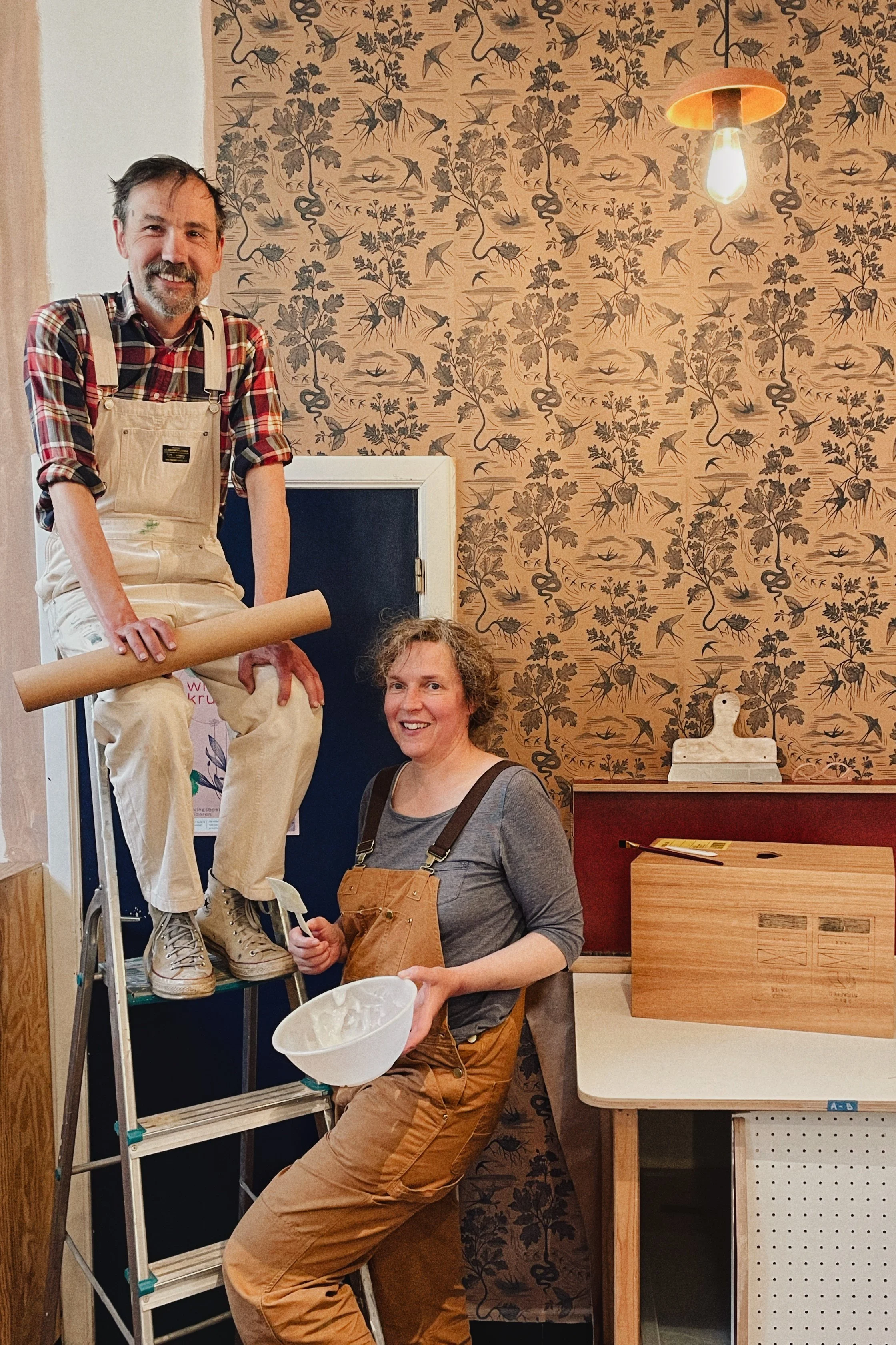
Two people
Different routes.
The same place.
Paint · Colour · Pigment · Precision
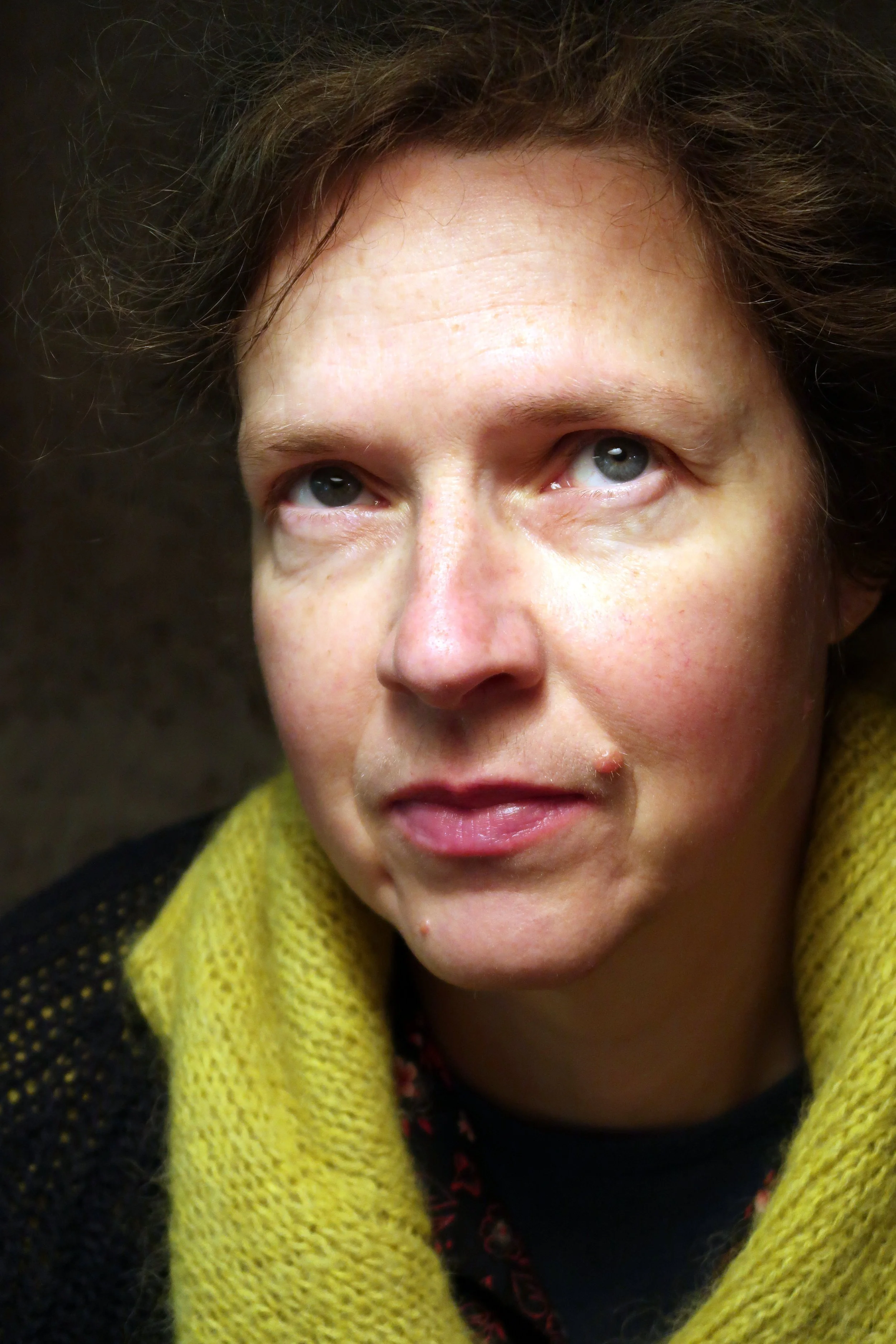
Vicky
Vermeire
The still force. The precision behind everything the atelier actually produces.
Vicky grew up around books, working for years in bookshops and antique bookshops, and has always been drawn to things made carefully enough to last. She studied paper restoration and hand weaving. She is not someone who watches a tutorial and moves on. She researches until she knows something properly, then does it until she does it right. Patience is not a personality trait for her, it is a working method.
When they started Atelier V.V., the distemper paint process was hers from the first day. Not in the sense that she follows a recipe, in the sense that she developed it, understands every variable in it, and has an eye for colour and pigment that is, quite simply, unmatched. Every colour that leaves this atelier has passed through that eye. That is not a small thing.
Vicky is the one who would mend a sweater indefinitely rather than replace it. The atelier runs on exactly that instinct.
Printing · Blocks · PR
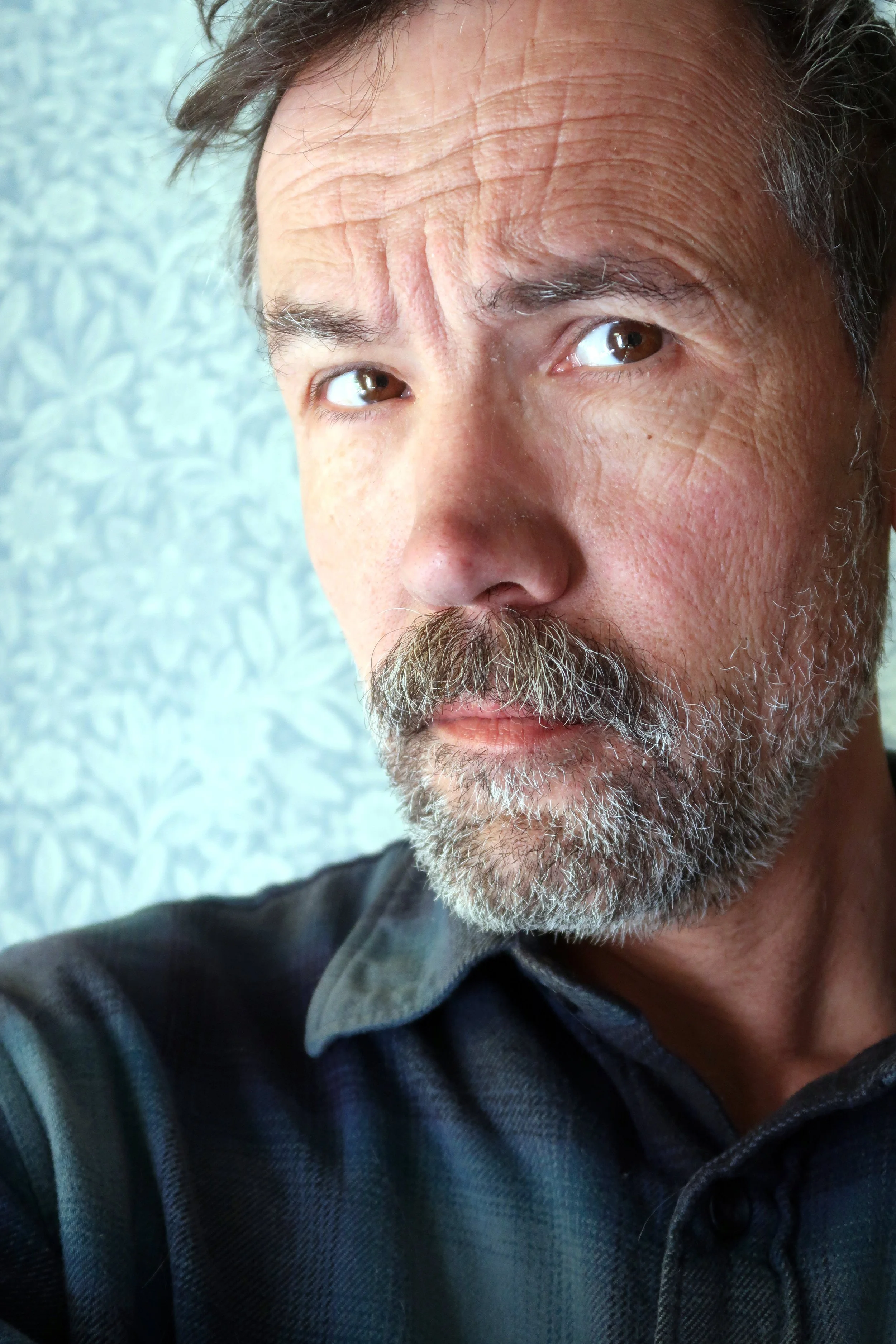
Dimitri
Vermeylen
The momentum. The dreaming, the talking.
He spent years in business before returning to craft, first as a volunteer in the typography workshop at the Industriemuseum Ghent, where historical print processes began to feel less like the past and more like something worth continuing. The turning point came when he and Vicky visited the wallpaper museum in Rixheim, France together, and stood in front of a printing technique that had all but disappeared from Belgium. What began as fascination became, very quickly, a plan.
Dimitri leads the printing process, the block preparation, the heritage reconstruction work, and the relationships, with artists, with architects, with institutions, with anyone who might care about what Atelier V.V. makes.
The beginning
A technique that Belgium
had forgotten.
We went looking for it.
The story starts at a museum in Rixheim, and a technique that hadn't been practised in Belgium for over half a century.
Dimitri and Vicky met at the fine arts academy in Ghent. Years later, after a career in business, Dimitri found his way back to craft, as a volunteer in the typography workshop at the Industriemuseum Ghent, where working with historical print processes began to feel like something that mattered.
Then came Rixheim. Together they visited the Musée du Papier Peint in the French Alsace, and stood in front of a printing technique that had once been common in Belgian workshops and had quietly disappeared when the last atelier closed around the mid-20th century. What began as fascination became, very quickly, a plan.
They built a workshop beside their home in Sint-Maria-Latem and started from almost nothing. The knowledge of traditional Belgian wallpaper printing had not been passed down, it had to be reconstructed. From historical books, from museum archives, from experiments that failed for months before they began to work. From the support of institutions who believed the craft was worth saving.
Three years later, Atelier V.V. prints wallpaper using three techniques, blockprint, linocut, and dominoté, works with artists and designers across all three, and carries out heritage reconstruction projects for historic buildings across Belgium. They will be learning until the end. That is still the point.
How we work.
Not principles on a wall. The decisions we make every day, about materials, about process, about what we are and are not willing to compromise on.
Breathable materials
Distemper paint breathes. So does the paper. For heritage buildings especially, this matters — materials compatible with the walls they go on.
No shortcuts
Every step of every technique is done by hand. The printing, the painting, the mixing, the registration. Always.
Nothing toxic
No acrylics. No toxic pigments. Earth minerals and non-toxic modern alternatives. Nothing that harms the wall, the room, or the person living in it.
Close collaboration
We work directly with architects, conservators, artists, and clients on every project. The result is always specific to the space it was made for.
Made to order
Nothing is printed in advance. Every roll is made for a specific project, in the exact length required. No overproduction, no waste.
Understanding materials
We make our own pigments when needed — smashing, grinding, washing. Not because it is efficient, but because it is how you learn what you are working with.
The letterpress workshop is open to artists, writers, and local makers with the right project. We've worked with poets, visual artists, graphic designers, and our neighbours at IJzerkotmolen. If you have something that needs a press and a pair of hands — see our collaborations, or get in touch directly.
Recognized by:
Appeared in:
With thanks to
We rebuilt this craft with the support of institutions who gave generously of their knowledge, their archives, and their time. Without them, there would be no workshop.
KIK-IRPA
Research support and archive access for heritage reconstruction projects.
Site: https://www.kikirpa.be/
Albert Cochie
Retired painter from Zottegem
And many more
…
Industriemuseum Ghent
Where historical print processes came alive again, and where the idea of Atelier V.V. first took shape.
David Skinner
Wallpaper historian and printer, based in Ireland
Musée du Papier Peint
Where the visit happened that changed everything. The museum that kept the knowledge alive.
Frank Cockerill
Friend and wallpaperguru. Works in the wallpaper since a while, and now at Erfurt.
Erfgoedcel Variant
Support for heritage craft practice and the preservation of traditional techniques in the region.
Dietmar Vanneste, Artsodi
Dietmar is a wallpaper restaurator, he has his workshop just around the corner from ours.
Site: https://www.artsodi.be/
The atelier is in Sint-Maria-Latem, close to Ghent and Brussels. We're happy to show the techniques in person, the press, the blocks, the paint, the printing on our open days. Subscribe to our newsletter or Instagram and we’ll keep you posted. There is no better way to understand what makes this wallpaper different than to watch it being made.
If you're an architect or conservator working on a project, we'll also come to you, with samples, with materials, with whatever the conversation needs.