ATELIER V.V. - HERITAGE
When the original
paper is gone,
we make it again.
We reconstruct historic wallpapers from fragments — using the same techniques, the same materials, and the same logic as the workshops that made them originally. The result looks right because it is right.
Handprinted distemper
Right look & feel
Period-accurate materials
Installation available
Not a facsimile.
Not a digital scan.
The real thing, made again.
Most wallpaper restoration stops at reproduction, a digital scan, a printed facsimile that looks approximately right from a distance. We do something different.
We reconstruct historic wallpaper the way it was made: by hand, with distemper paint ground from earth and organic pigments, with pearwood blocks cut to the original pattern, on paper that matches the weight and character of the original. The result has a fullness and depth that no digital reproduction achieves, not because of any chemical property, but because of what distemper paint actually looks like on a wall. Richer. Fuller. More depth. A surface that has presence.
We love working together with historians, architects, conservators, and researchers. We bring the printing, the technical knowledge of distemper, pigment, paper, and block. The knowledge of the building, its history, and its significance comes from the people we work with. That combination is what makes a reconstruction right.
Printers
With deep knowledge of our materials. Nothing more, nothing less.
Network
Of researchers, conservators, historians and institutions we work with.
Result
Wallpaper that looks right, because the technique and materials are right
01
First contact
Site visit · Assessment · Conversation
Every project starts with a conversation, ideally on site, in front of the wall.
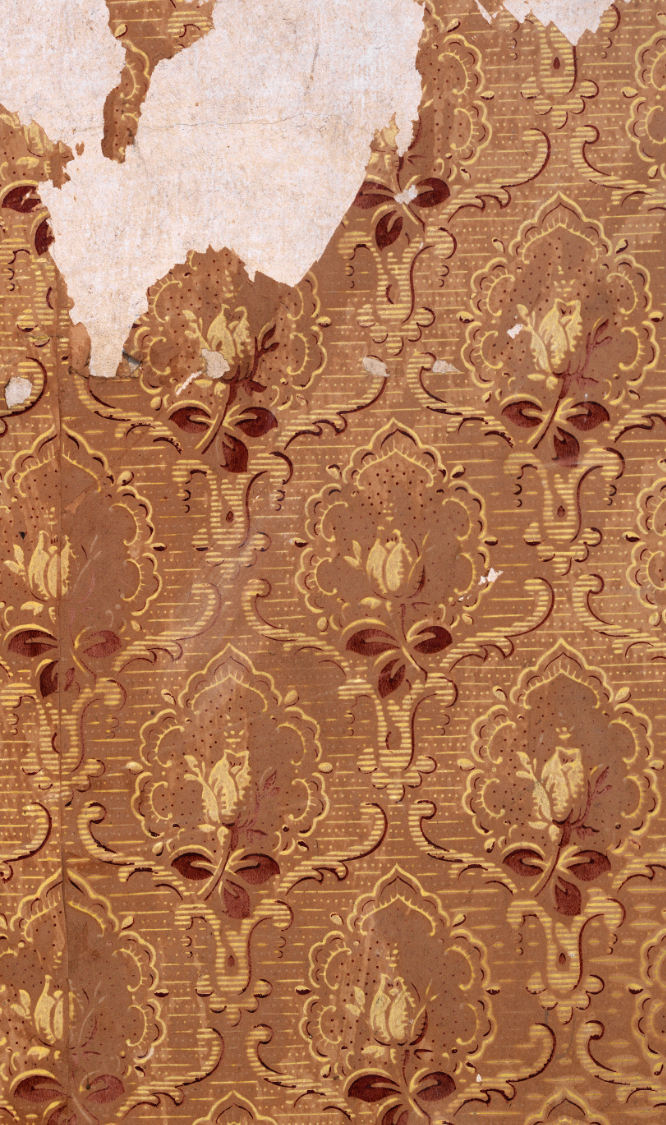
We visit early, before anything is decided. We look at what survives, fragments behind radiators, under door frames, in archive photographs, in museum collections. We look at the condition of the substrate. We ask questions and we listen to the people who know the building.
We'll tell you honestly at this stage what is feasible and what isn't. There is no commitment yet on either side.
03
Pattern reconstruction
Redrawing · Block cutting · Proofing
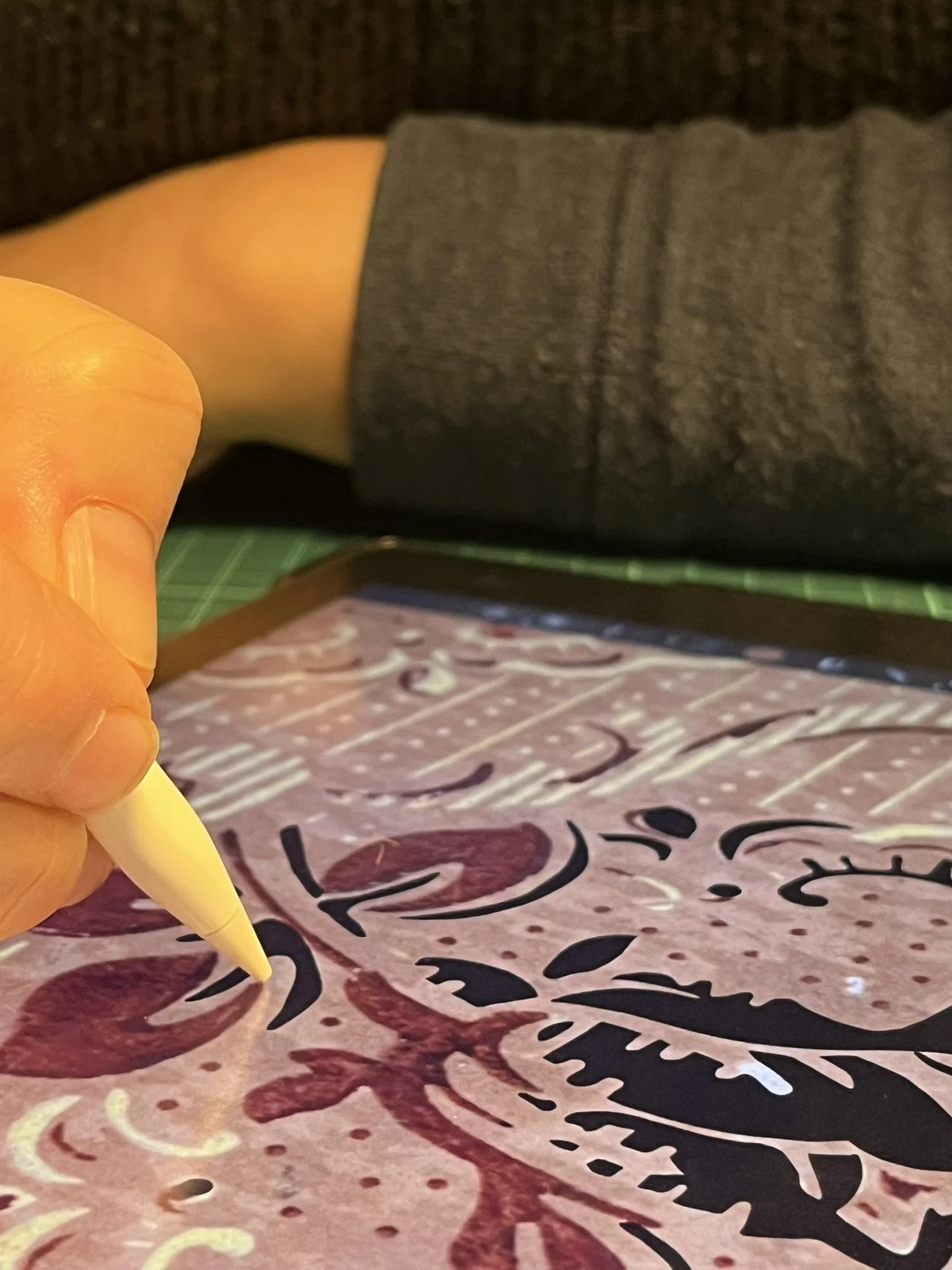
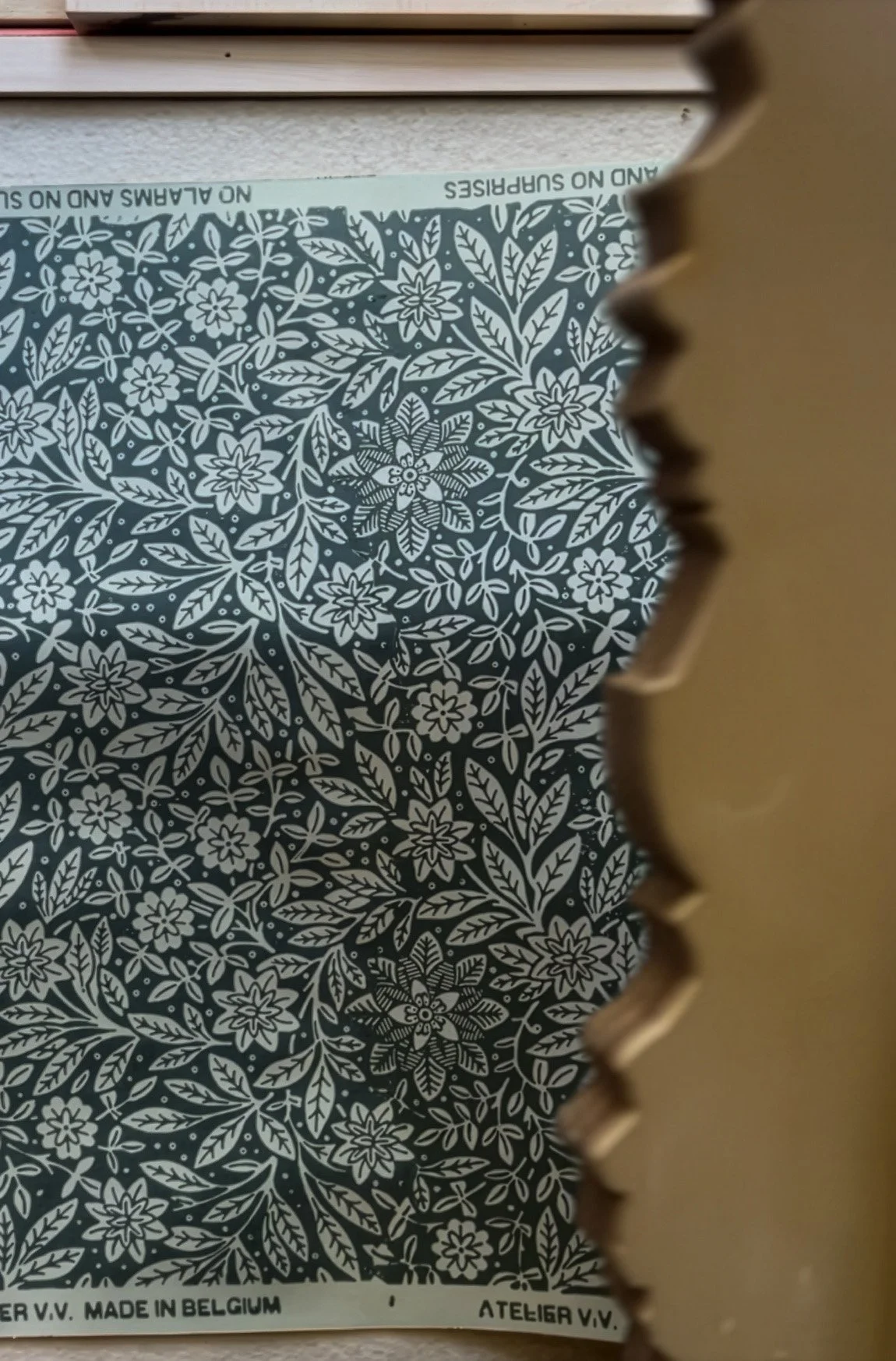
Where a full repeat is available, we redraw it precisely and cut new pearwood blocks. Where it isn't, we work with specialists.
When a complete pattern repeat survives , in the fragment, in archive documentation, or in a museum reference, we redraw it digitally with precision and cut new pearwood blocks by CNC. The redrawing is careful work: every line, every registration point, every element of the original pattern logic.
When only a partial fragment exists, we work with pattern reconstruction specialists to complete what is missing. We are printers. We know our limits. The reconstruction of a partial pattern is specialist work and we treat it as such.
Before any full production begins, we produce test prints and colour proofs for client approval. Nothing is committed until both sides are satisfied.
04
Printing
Distemper · Pearwood · Colour by colour
The same process we use for all our blockprint work, distemper paint, pearwood blocks, colour by colour. The difference is the pattern and the brief.
Distemper is made fresh for every print session, chalk, hide glue, and pigments mixed to the reconstructed colour. Earth and organic pigments, non-toxic throughout. The same combination used in the original workshops.
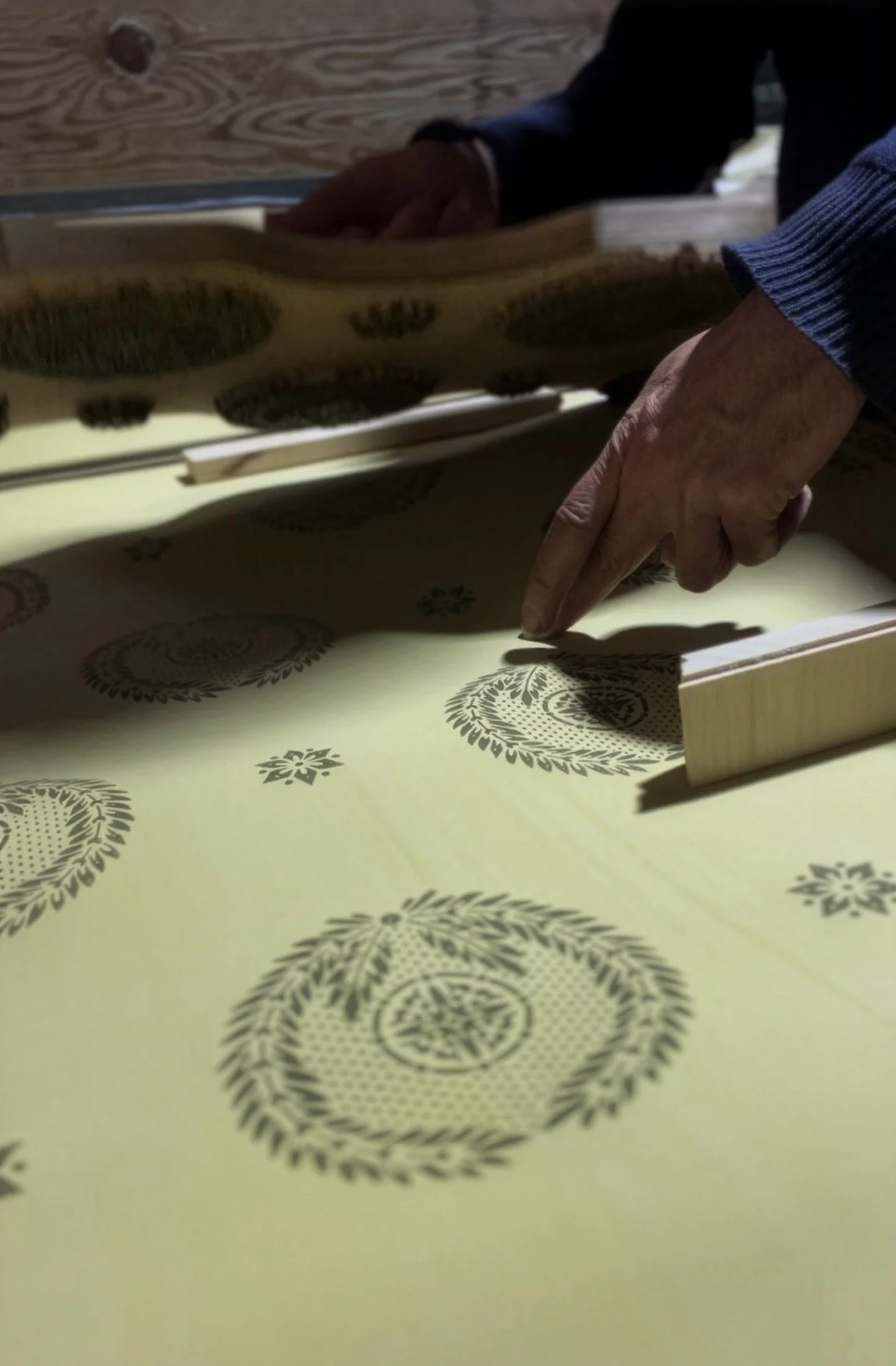
The printing follows the same rhythm as any blockprint work: block to cloth, cloth to paper, colour dries, next colour begins. Layer by layer. The result is a surface with the same fullness and depth as the original, because it is made the same way.
Fragment analysis
Colour · Material · Technique
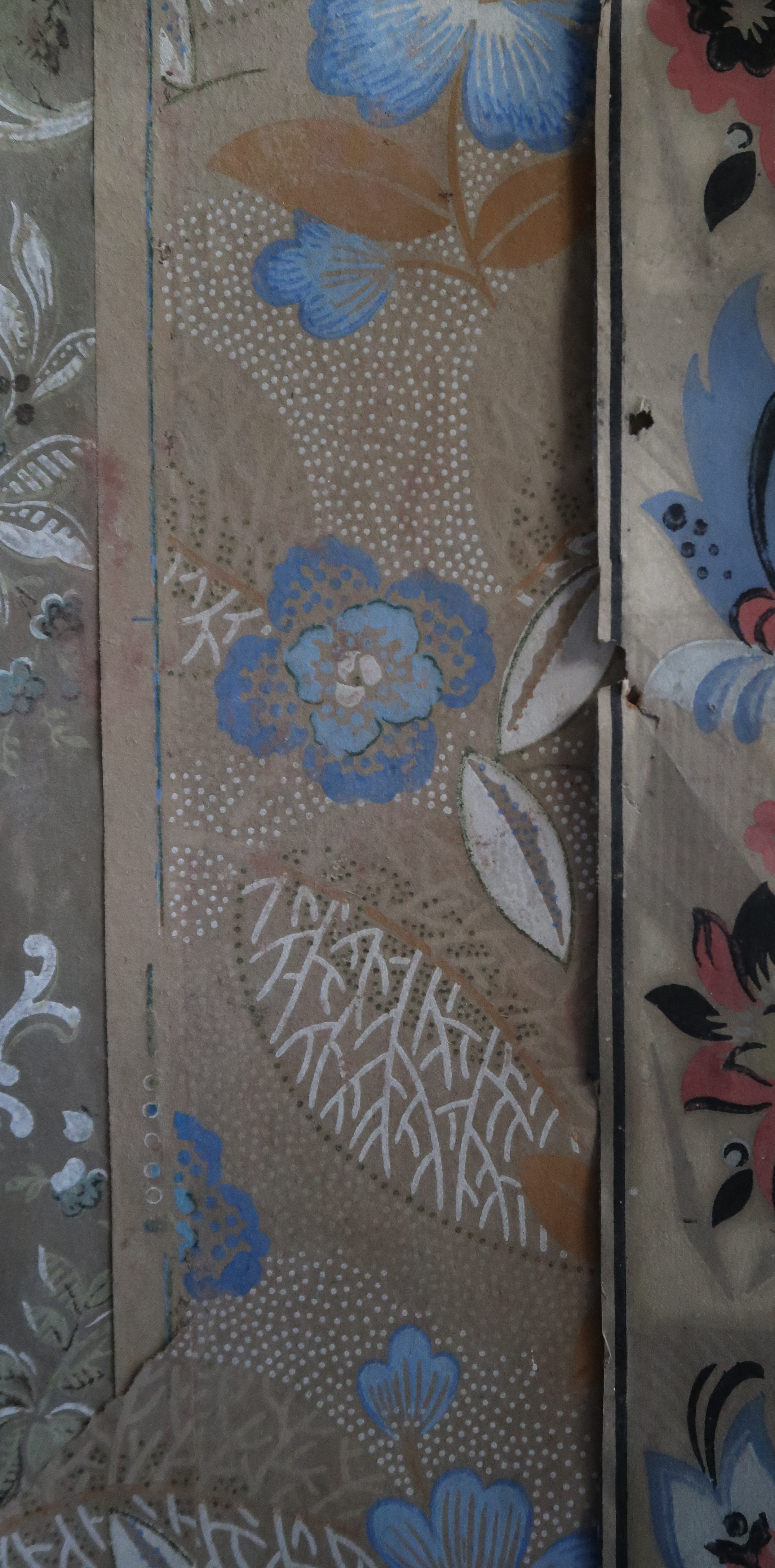
We work with whatever survives. Our job at this stage is to get as close as possible to the original colour and material.
Fragments are examined closely, layers of paint, pigment identification, paper type, printing technique. Pigment identification, removing paper from the wall or in depth archive digging are specialists jobs, we work with conservators or researchers from our network for this. Identifying and reproducing the printing technique is our job.
The colour reconstruction is Vicky's territory. Matching a historic pigment combination to a fragment, accounting for ageing and fading, and arriving at what the original colour would have been — that requires an eye that cannot be replaced by a colour chart.
02
05
Installation
Materials as close as possible to the originals
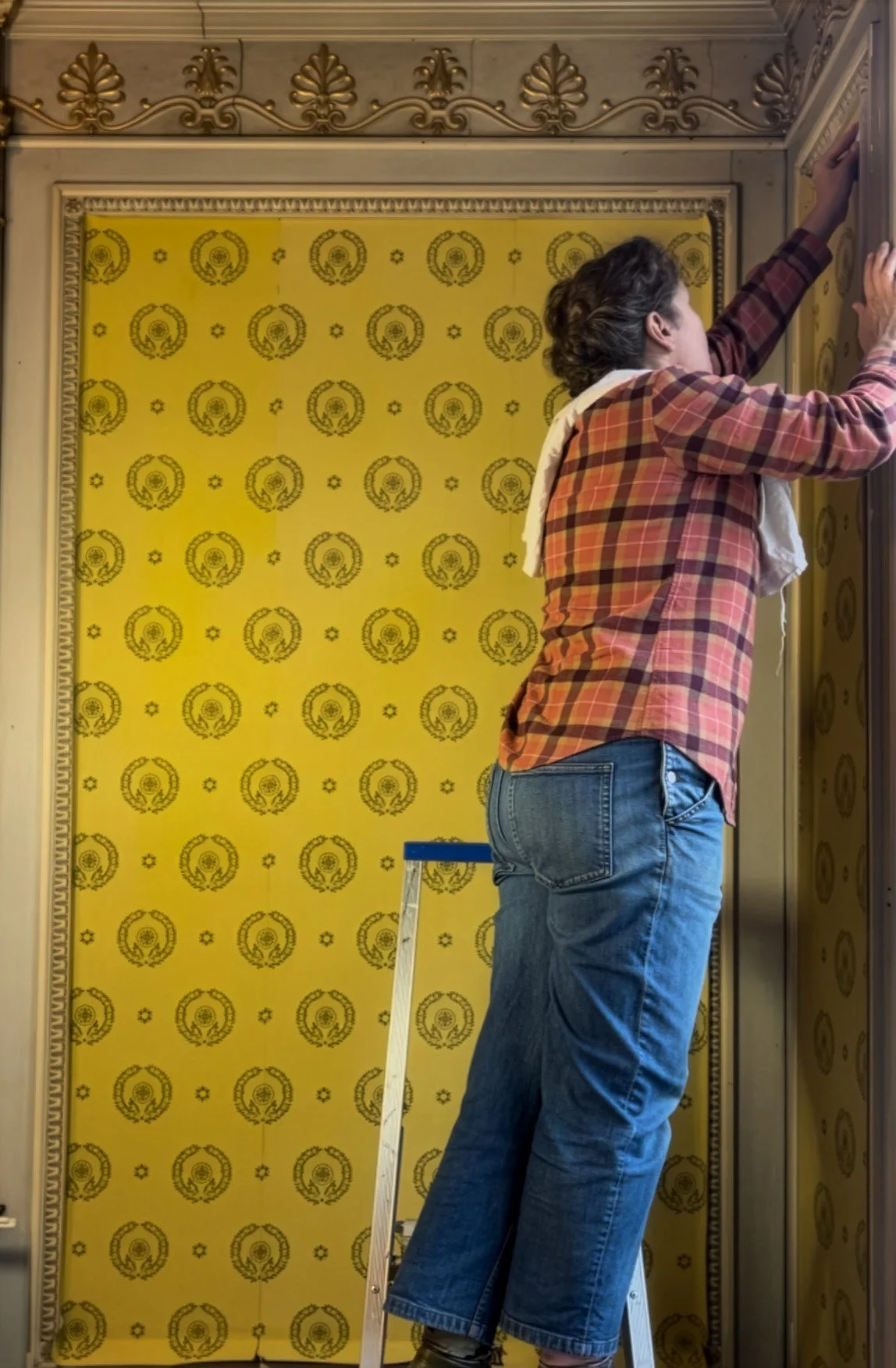
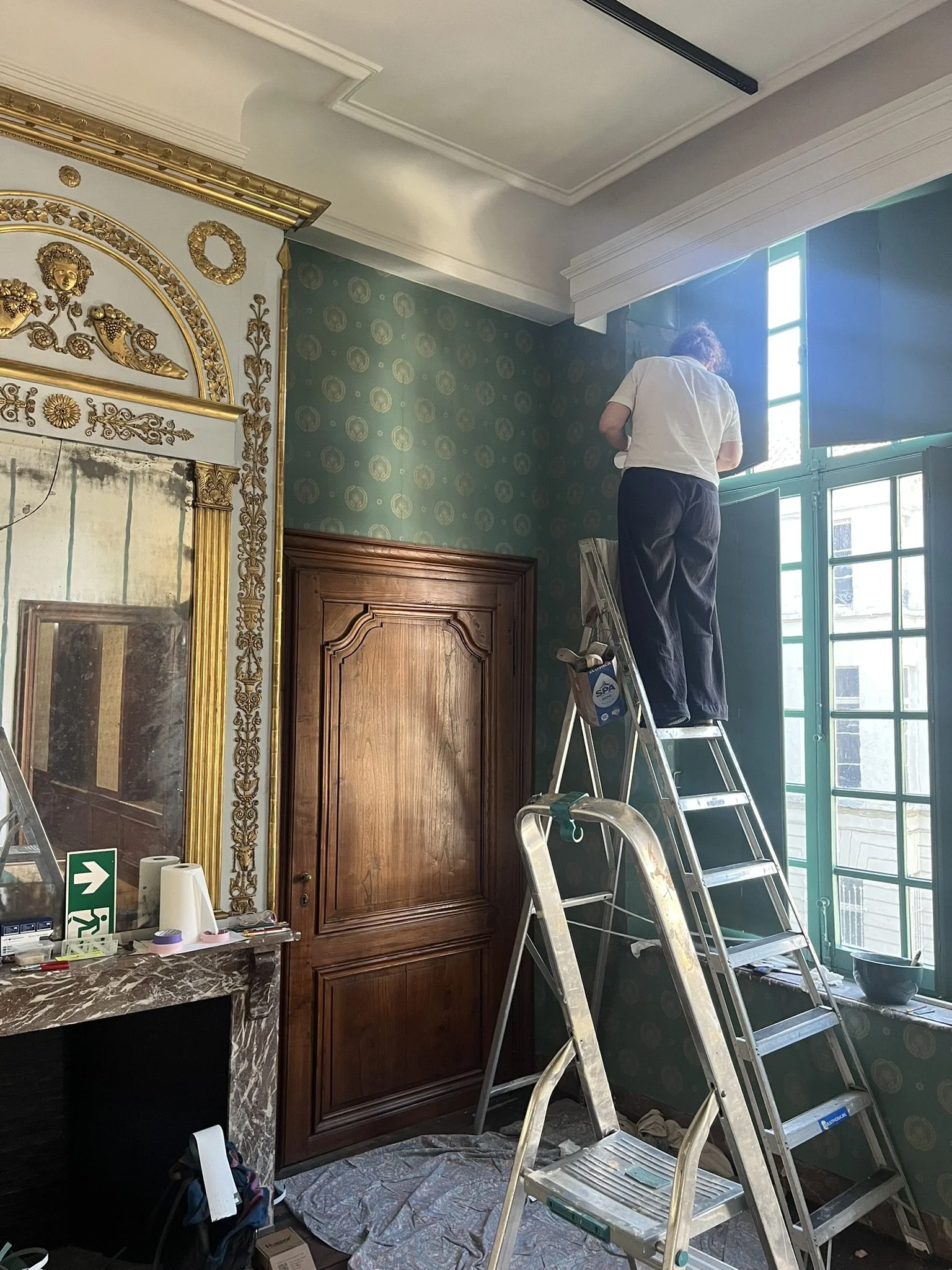
We install where needed, with materials that match the original as closely as possible.
Installation is available as part of our service, including on linen where the project calls for it. We work with the materials that are right for the building and the project, guided by the conservators and architects on the team.
Installation is not our specialism. The printing is. But we know how to hang what we make, and we do it carefully.
The materials.
The materials we use for heritage work are chosen to be as close as possible to the originals, not out of dogma, but because that is what makes the result look right. Distemper paint has a fullness and depth that modern reproductions don't replicate. The paper is chosen to suit the project.
Distemper paint
Chalk · Hide glue · Pigments · Made warm
Made fresh before every session. Matte, velvety, breathable. No synthetic binder, no acrylic. The paint that gives heritage wallpaper its characteristic fullness.
Earth & organic pigments
Non-toxic · Matched to original
A combination of earth minerals: ochre, umber, iron oxide, green earth and organic pigments. Chosen for accuracy to the original and for being non-toxic throughout. Mixed by eye to match the reconstructed colour.
Papers
Matched to the project
Cotton rag, thin cellulose, or non-woven: chosen to match the weight and character of the original paper as closely as possible. We advise on the right choice for each specific project.
Installation
Available · Including on linen
We install with materials as close as possible to the originals. On linen where the project requires it. Guided by the conservators and architects on the project.
Case study
Completed project · Ghent
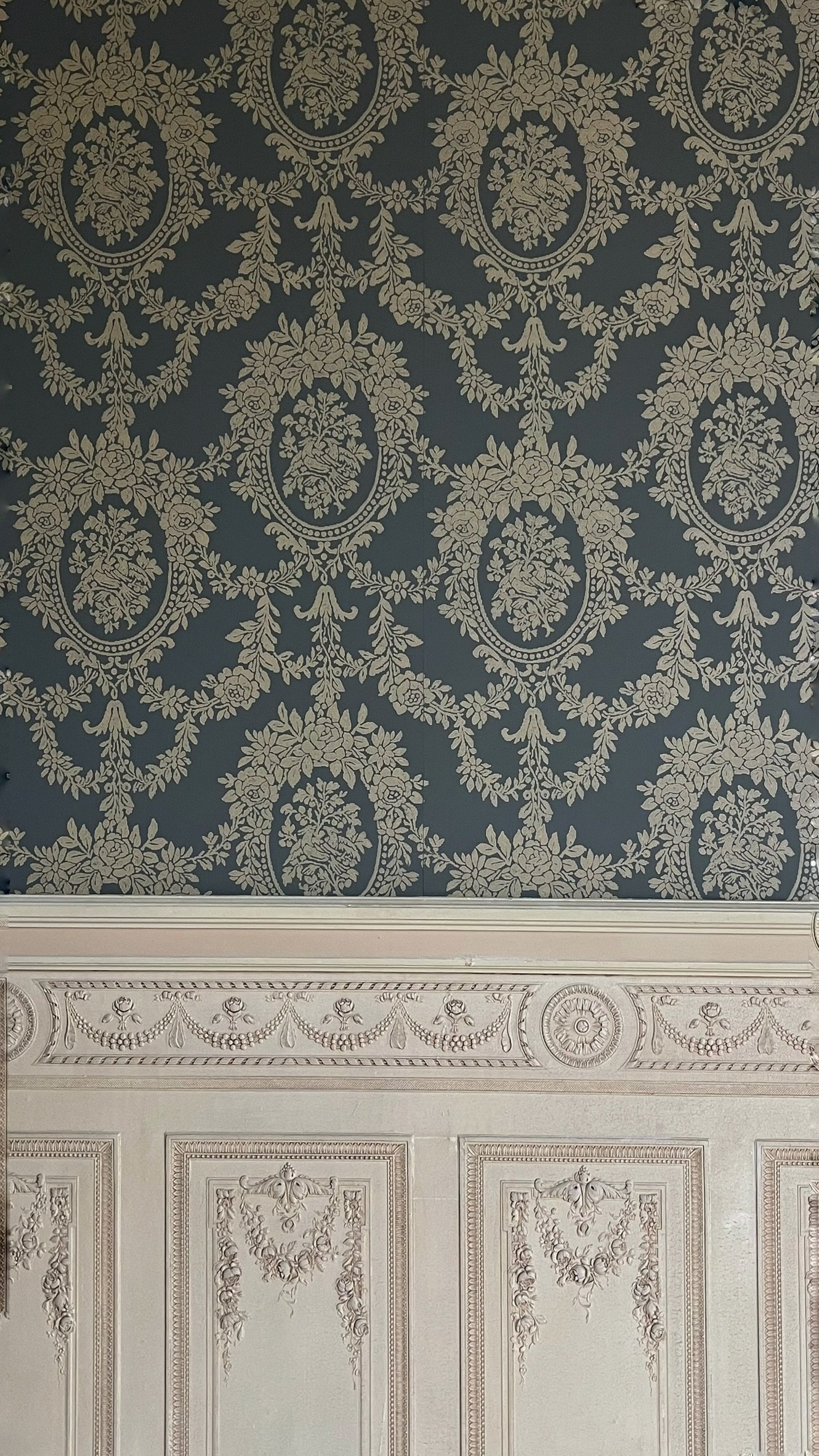
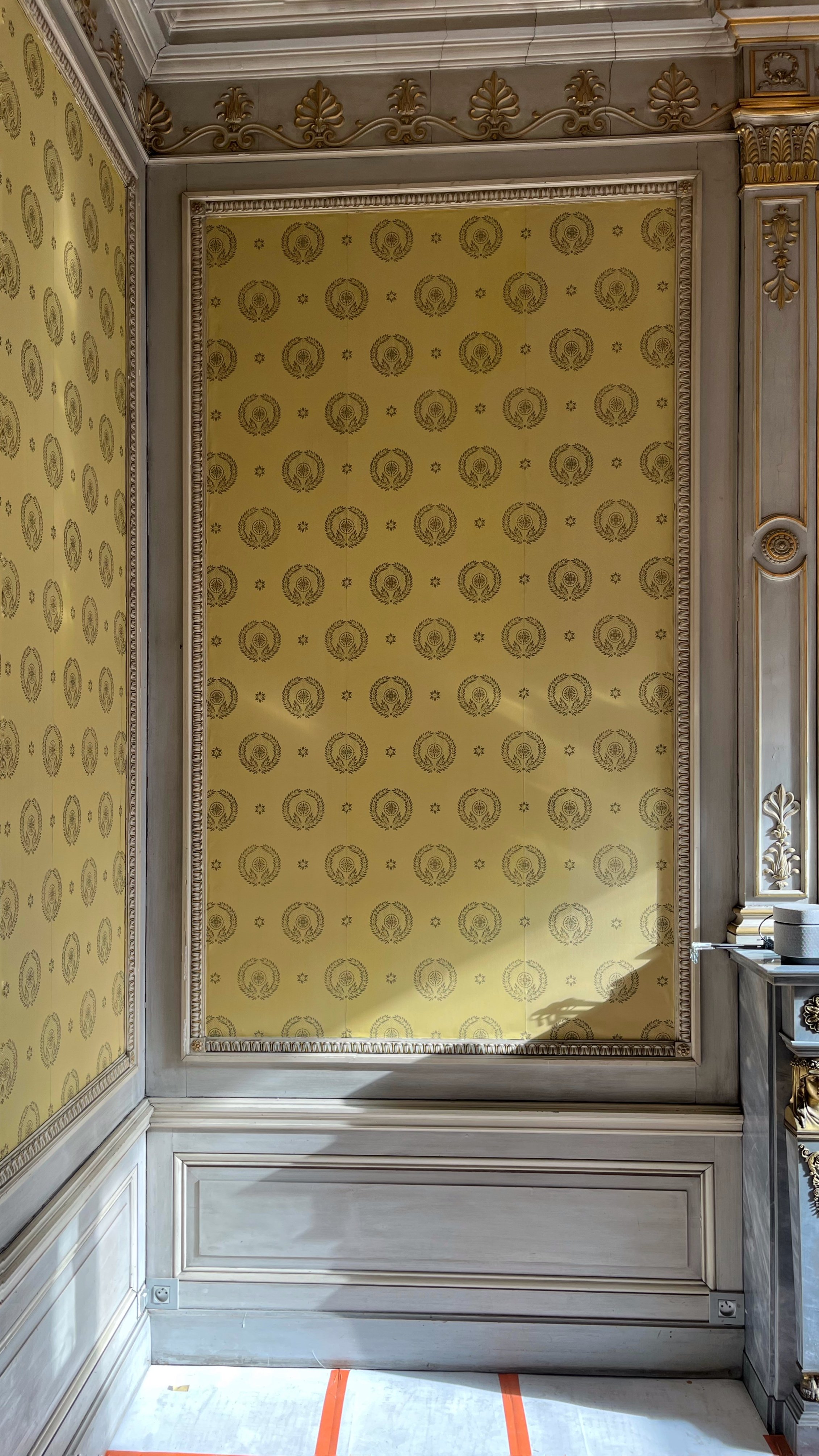
A recent project in Ghent, from fragment to finished wall. A Desfossé et Karth wallpaper from ca. 1930, reconstructed for a private residence.
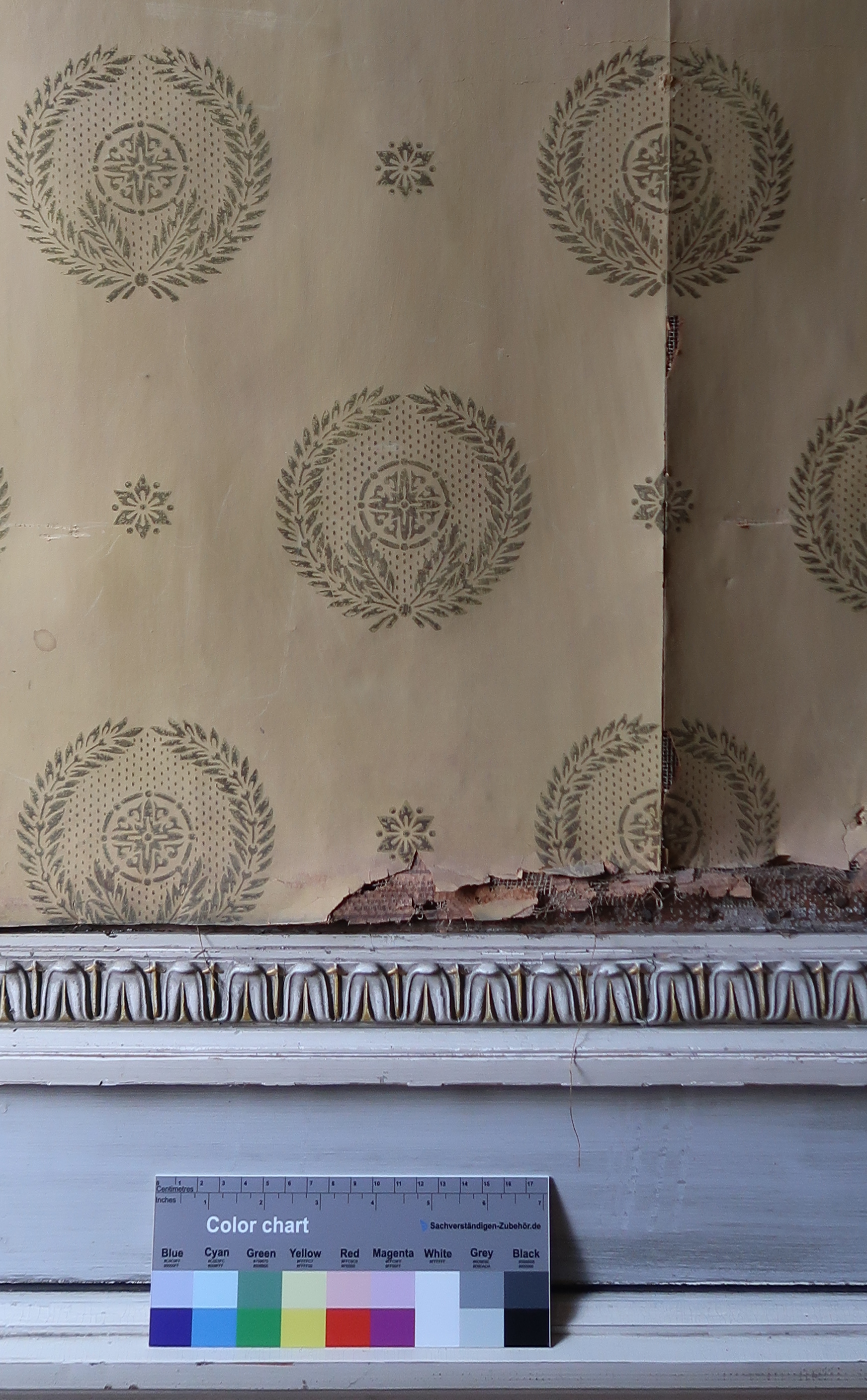
Desfossé et Karth
Private residence · ca. 1930 · Ghent
A late 19th century Desfossé et Karth wallpaper, too damaged to conserve, its backing largely detached. We were asked to reconstruct both the paper and install it using period materials.
Working from surviving wallpaper, we reconstructed the background colours, built in two transparent layers and redrawn the pattern. A small-format test print and colour card were submitted for approval before full production began.
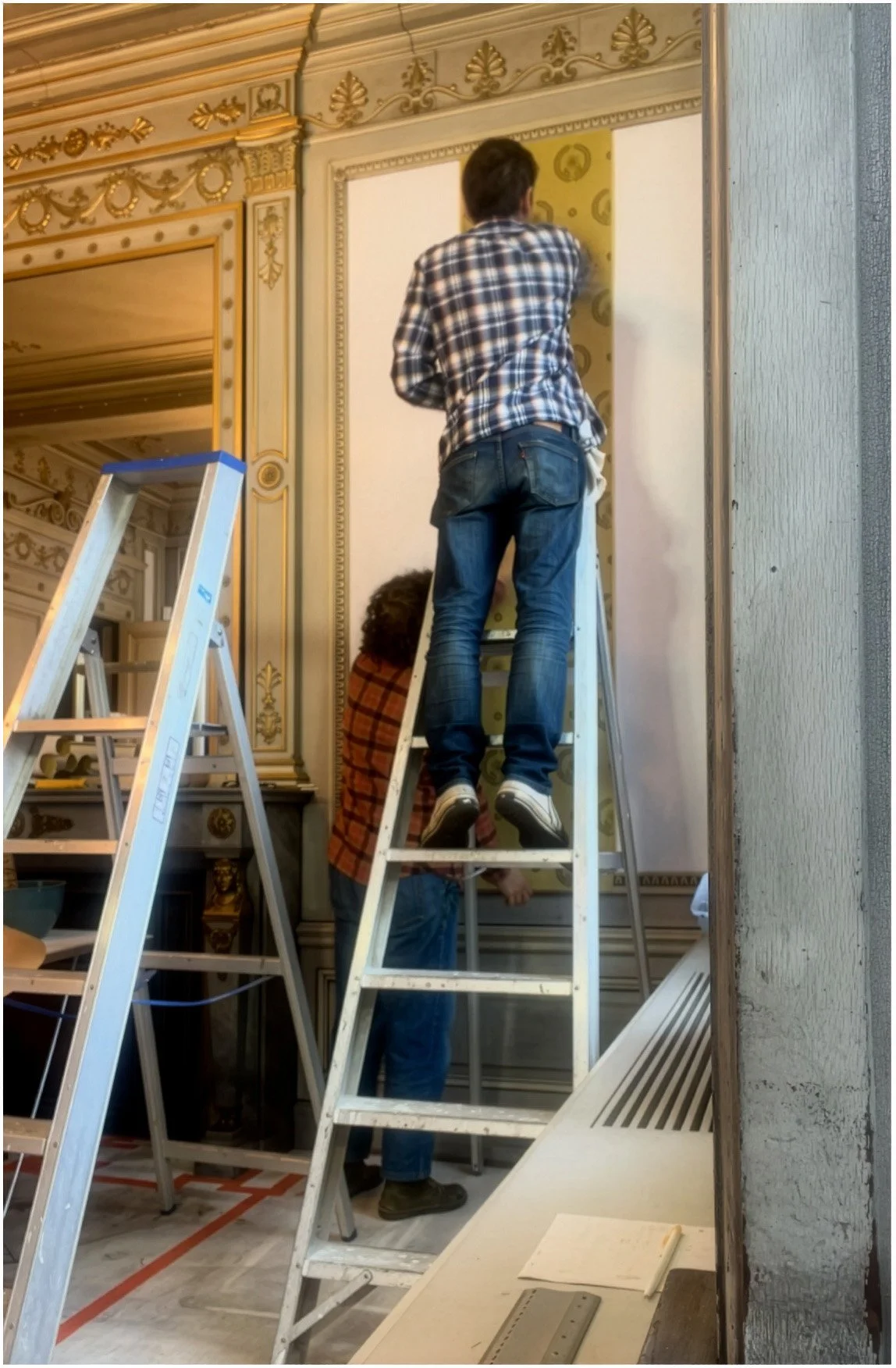
The printed sheets were installed with materials as close as possible to the originals. The entire process was carried out without shortcuts, because shortcuts show, and this wall needed to be right.
What happened, step by step
1
Wallpaper
analysis
Background colour in two transparent layers. Pattern redrawn from surviving material.
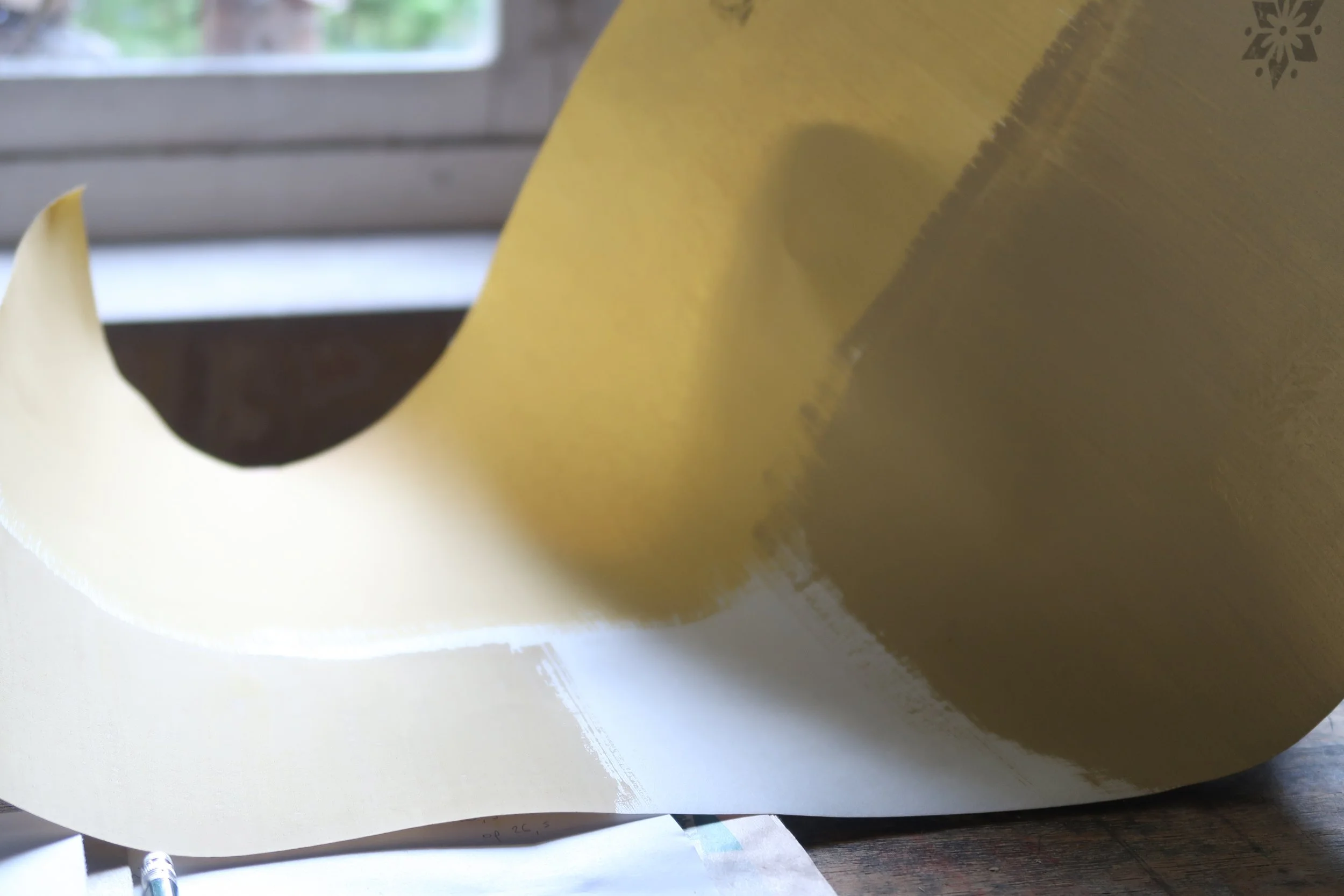
Colour reconstruction
Earth and organic pigments matched to the original. Mixed by eye. Colour card submitted.
2
3
Test print
Small-format proof submitted for client approval before full production began.
Block cutting
New CNC pearwood block cut for the pattern. Proofed on matching paper.
Painted and printed in distemper, colour by colour. Dried between each pass.
4
5
6
Installation
Installation with original technique. Wallpaper on linen.
People we love
working with.
Tell us about
your project.
We are printers with a deep knowledge of our materials. The knowledge of the building and its history comes from the people we work with. That combination is what makes heritage work right.
We work across Belgium and are open to projects beyond. We're happy to visit early, to see the fragment, understand the brief, and tell you honestly what is possible before any commitment is made.
We collaborate in Dutch, French, and English.
Heritage architects
Working on listed or protected buildings where material and visual accuracy are required
Interior historians
Researching or advising on period interiors where the wallpaper is part of the historical evidence
Conservators
Needing a specialist printer as part of a broader conservation project
Museums & institutions
Furnishing historic interiors or period rooms with accurate handprinted wallpaper
Private owners
With listed properties or a genuine commitment to doing the restoration properly
Tell us about
your project.
Every heritage project starts with a conversation. Tell us what you have — a fragment, a photograph, a period room that needs its walls back — and we'll tell you honestly what is possible and what it will take.
We are happy to visit the site early, at no commitment. Seeing what survives is always the right starting point.